
Does plastic recycling work? For most plastic, no. Of the 6.9 billion tons of plastic that have become waste, 6.3 billion tons never reached a recycling facility. Plastic production has outpaced recycling more than five times over in the past decade. Much of what we put in the bin was shipped overseas and dumped. This OPDERA guide brings together the research we have shared, with links to every original source.
The numbers: 9.2 billion tons made, almost none recycled
Plastic wasn’t invented until the late 19th century, and production only took off around 1950. Since then the world has made 9.2 billion tons of it. More than 6.9 billion tons have become waste, and 6.3 billion tons of that waste never made it to a recycling facility. That figure stunned the scientists who calculated it in 2017.
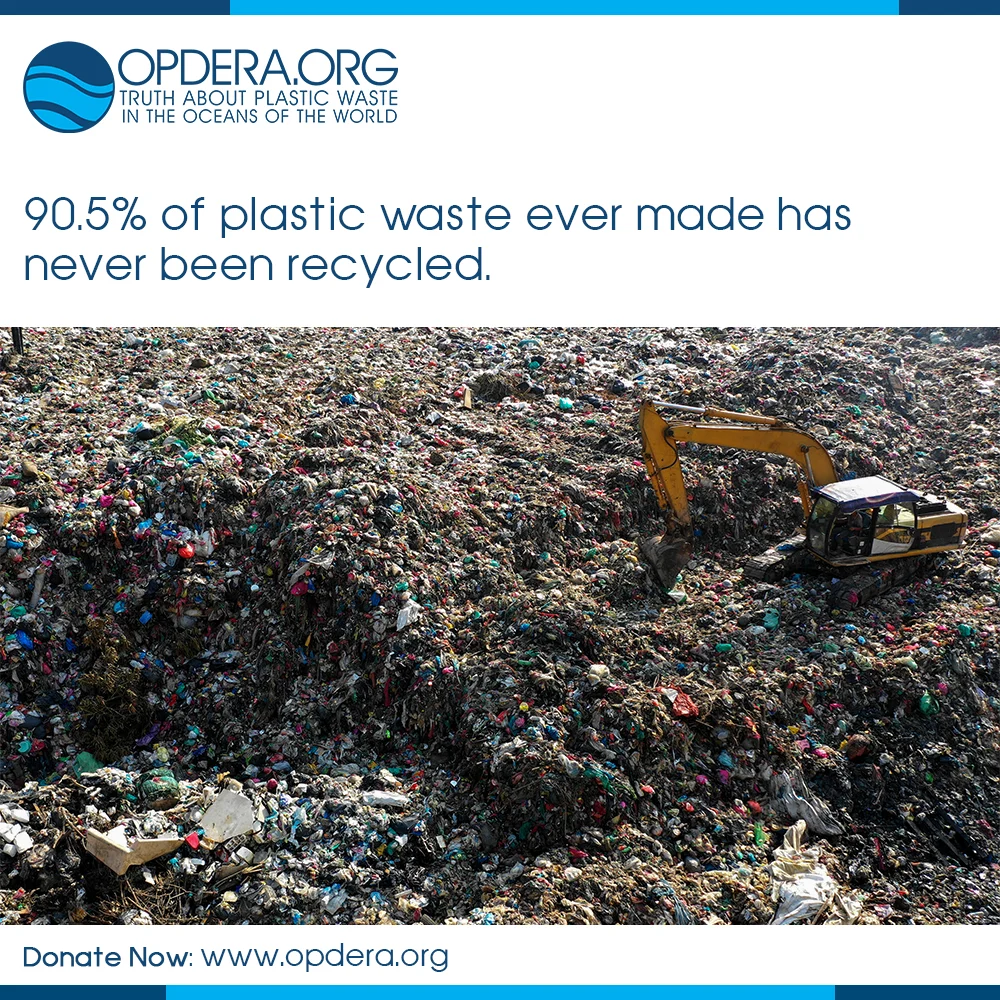
About 90% of all plastic waste has never been recycled at all. Plastic isn’t biodegradable, and waste-collection programs have been too inefficient to make a noticeable difference.
Plastic is light, cheap, easy to store and ship, and can hold almost anything, which is why manufacturers use it for everything from ketchup bottles to disposable cutlery. But it is much harder to recycle than glass, aluminum or paper. Most plastic packaging is never even collected by waste management, and only a negligible fraction of what is collected is actually recycled. Most plastic ends up in a landfill, despite decades of recycling promotion.
Single-use plastic: 15 minutes of use, centuries of waste

We have built a “disposable” lifestyle. Around 50% of plastic is used once and thrown away. Worldwide, a plastic bag has an average working life of just 15 minutes.
The world uses about 500 billion single-use plastic bags a year. Even when they are thrown away properly, bags are so light that the wind picks them up. They escape bins and landfills, blow down streets, catch in trees, clog drains and make their way to the sea, where they can last for hundreds of years. The oil and soda industries need to adopt alternative, biodegradable packaging.
Where “recycled” plastic really goes
For years, the United States shipped its plastic waste to China. China never recycled it, because most of it can’t be recycled, and US waste companies never expected it to be. When China stopped accepting US plastic waste, the trade moved on.

Malaysia became the world’s number one importer of plastic waste after China left the market, and it is now choking on plastic that can’t be recycled. Interpol has also reported a spike in organized crime smuggling containers of plastic scrap from rich countries into Southeast Asia (VICE).
Research shows plastic most often leaks into the environment in the country it is shipped to (The Conversation). A study in the journal Science Advances ranked the United States among the top three countries contributing to coastal plastic pollution, once scrap exports, illegal dumping and littering are counted. That challenges the long-held assumption that the US was “managing” its plastic waste.
Who makes the plastic, and who gets blamed

A handful of global brands produce a large share of the world’s plastic packaging. Rolling Stone’s Tim Dickinson laid out how petroleum companies and soda makers such as Coke and Pepsi promoted recycling claims that didn’t hold up (Rolling Stone). For the full story, read our post Lawsuit calls out big plastic and names big brand offenders. In that lawsuit, Earth Island Institute sued major beverage, food and consumer-goods companies in California over misleading consumers about recycling.
Meanwhile, the message to consumers is that the plastic problem is their fault: recycle more, do better, get your community involved. The companies don’t stop supplying plastic, don’t offer alternative packaging, and don’t collect their own waste (How big plastic makes you feel guilty).
If you have 15 minutes, watch CNBC’s explainer on how the fossil fuel industry is pushing plastics on the world. It covers how the problem developed, where it stands now and how it can be fixed (CNBC).
What you can do
- Refuse single-use plastic where you can. Recycling won’t catch it.
- Ask brands for alternative packaging, and support the companies that offer it.
- Learn how plastic gets into the ocean, then take the OPDERA Pledge and help fund our next voyage.